Showing posts with label in the news. Show all posts

Oct 3, 2005

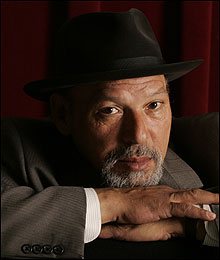
August Wilson, Playwright, Dies at 60


NEW YORK (AP) --Playwright August Wilson, whose epic 10-play cycle chronicling the black experience in 20th-century America included such landmark dramas as ''Fences'' and ''Ma Rainey's Black Bottom,'' died Sunday of liver cancer, a family spokeswoman said. He was 60.

Wilson died at Swedish Hospital in Seattle, surrounded by his family, said Dena Levitin, Wilson's personal assistant. The playwright had disclosed in late August that his illness was inoperable and he had only a few months to live.

His plays were big, often sprawling and poetic, dealing primarily with the effects of slavery on succeeding generations of black Americans: from turn-of-century characters who could remember the Civil War to a prosperous middle class at the end of the century who had forgotten the past.

Wilson's astonishing creation, which took more than 20 years to complete, was remarkable not only for his commitment to a certain structure -- one play for each decade -- but for the quality of the writing. It was a unique achievement in American drama. Not even Eugene O'Neill, who authored the masterpiece ''Long Day's Journey Into Night,'' accomplished such a monumental effort.

During that time, Wilson received the best-play Tony Award for ''Fences,'' plus best-play Tony nominations for six of his other plays, the Pulitzer Prize for both ''Fences'' and ''The Piano Lesson,'' and a record seven New York Drama Critics' Circle prizes.

''The goal was to get them down on paper,'' he told The Associated Press during an April 2005 interview as he was completing ''Radio Golf,'' the last play in the cycle. ''It was fortunate when I looked up and found I had the two bookends to go. I didn't plan it that way. I was able to connect the two plays.''

Wilson was referring to ''Gem of the Ocean,'' chronologically the first play in the cycle, although the ninth to be written. It takes place in 1904 and is set in Pittsburgh's Hill District at 1839 Wylie Ave., a specific address that figures prominently, nearly 100 years later, in the last work, ''Radio Golf,'' which premiered in April at the Yale Repertory Theatre.

Pittsburgh, Wilson's birthplace, is the setting for nine of the 10 plays in the cycle (''Ma Rainey's Black Bottom'' is set in a Chicago recording studio). Although he lived in Seattle, the playwright had a great deal of affection for his hometown, especially ''the Hill,'' a dilapidated area of the city where he spent much of his youth.

Wilson, a bulky, affable man who always had a story to tell, usually returned to Pittsburgh once a year to visit his mother's grave, but he said he couldn't live there: ''Too many ghosts. But I love it. That's what gave birth to me.''

Born Frederick August Kittel on April 27, 1945, he was one of six children of Frederick Kittel, a baker who had emigrated from Germany at the age of 10, and Daisy Wilson. A high school dropout, Wilson enlisted in the Army but left after a year, finding employment as a porter, short-order cook and dishwasher, among other jobs. When his father died in 1965, he changed his name to August Wilson.

Wilson was largely self-educated. The public library was his university and the recordings of such iconic singers and musicians as Bessie Smith and Jelly Roll Morton, and the paintings of such artists as Romare Bearden his inspiration.

He started writing in 1965, when he acquired a used typewriter. His initial works were poems, but in 1968, Wilson co-founded Pittsburgh's Black Horizon Theater. Among those early efforts was a play called ''Jitney,'' which he revised more than two decades later as part of his 10-play cycle.

In 1978, he moved to Minnesota, writing for the Science Museum in St. Paul and later landing a fellowship at the Minneapolis Playwrights Center.

In 1982, his play, ''Ma Rainey's Black Bottom,'' was accepted by the National Playwrights Conference at the O'Neill Theater Center in Connecticut. It was there that Wilson met Lloyd Richards, who also ran the Yale School of Drama. Their relationship proved fruitful, and Richards directed six of Wilson's plays on Broadway.

The first was ''Ma Rainey,'' which opened on Broadway in 1984. Wilson's reputation was cemented in 1987 by the father-son drama ''Fences,'' his biggest commercial success. The play, which featured a Tony-winning performance by James Earl Jones, ran for more than a year.

It was followed in New York by ''Joe Turner's Come and Gone'' (1988), ''The Piano Lesson'' (1990), ''Two Trains Running'' (1992), ''Seven Guitars'' (1996), ''Jitney'' (2000), ''King Hedley II'' (2001) and ''Gem of the Ocean'' (2004).

Wilson's plays gave steady employment to black actors, not only in New York but in regional theaters, where most of his plays tried out before coming to Broadway. Besides Jones, such well-known actors as Laurence Fishburne, Phylicia Rashad, Angela Bassett, Charles S. Dutton, Brian Stokes Mitchell, S. Epatha Merkerson, Roscoe Lee Browne and Leslie Uggams appeared in his plays on Broadway.

''August's work is like reading a rich novel,'' says Anthony Chisholm, a veteran Wilson performer in such plays as ''Gem of the Ocean'' and ''Radio Golf.''

''It conjures up vivid images in the mind, and it makes the actor's job easier because you have something to draw upon to build your character.''

R.I.P.

Aug 29, 2005

Playwright August Wilson Has Liver Cancer


Pulitzer Prize-winning playwright August Wilson has been diagnosed with liver cancer and told a newspaper in his native Pittsburgh that he is dying.

Wilson, 60, who lives in Seattle, was diagnosed with the ailment in June.

"It's not like poker, you can't throw your hand in," Wilson told the Pittsburgh Post-Gazette in a story published Friday. "I've lived a blessed life. I'm ready."

Wilson has recently been completing his 10-play cycle chronicling the black experience in 20th-century America - one play for each decade.

Two plays in the cycle, "Fences" and "The Piano Lesson," earned Pulitzer Prizes. The 10th play, "Radio Golf," is now running at the Mark Taper Forum in Los Angeles.

Wilson's personal assistant, Deanna Levitin, told The Seattle Times until very recently, Wilson was working on rewrites of "Radio Golf," and that people close to him remain optimistic.

"One of the things I'm proudest of in my career is producing so much of

August's work here," Seattle Repertory Theater managing director Benjamin Moore said. "I'm going to believe that since August is such a feisty guy, he'll meet this health challenge like he's met the challenge of writing an extraordinary cultural history."

Wilson has lived in Seattle's Capitol Hill neighborhood since 1990. He and his wife, Constant Romero, a costume designer he married in 1994, have a daughter, Azula. Wilson also has a daughter from an earlier marriage.

"He's taking (the cancer) very well, with a lot of strength and determination," his wife told the Seattle Post-Intelligencer. "It's so hard when an illness falls on you. He has so many plans for working."

The Pittsburgh newspaper said doctors had recommended drug therapy followed by a liver transplant, but the disease proved too far advanced. Wilson said his physicians told him then that he had three to five months to live.

Aug 10, 2005

R.I.P. John H. Johnson


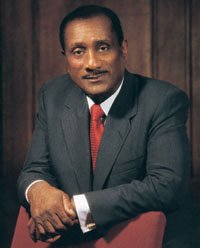
Black Publishing Pioneer John Johnson Dies at 87
His Magazines Ebony and Jet Were Groundbreakers
By HERBERT G. McCANN, AP

CHICAGO (Aug. 9) - Publisher John H. Johnson, whose Ebony and Jet magazines countered stereotypical coverage of blacks after World War II and turned him into one of the most influential black leaders in America, died Monday, his company said. He was 87.

Johnson died of heart failure at Northwestern Memorial Hospital after a long illness, said LaTrina Blair, promotions manager with Chicago-based Johnson Publishing Co.

Johnson broke new ground by bringing positive portrayals of blacks into a mass-market publication and encouraging corporations to use black models in advertising aimed at black consumers.

"We have lost a legend, a pioneer, a visionary," said Earl G. Graves, publisher of Black Enterprise magazine. "As an American, he was ahead of his time. Ebony is part of Americana now."

Born into an impoverished family in Arkansas, Johnson went into business with a $500 loan secured by his mother's furniture and built a publishing and cosmetics empire.

Johnson built Ebony from a circulation of 25,000 on its first press run in November 1945 to a monthly circulation of 1.9 million in 1997. Jet magazine, a newsweekly, was founded in 1951 and has a circulation of more than 954,000. A third magazine, Ebony Man, a monthly men's magazine, was started in 1985.

Johnson launched Ebony just after World War II, as black soldiers were returning home. At the time there were no black players in major league baseball and little black political representation.

With blacks' incomes far below white Americans, the idea of a black publishing company was widely dismissed. Civil rights leader Roy Wilkins advised Johnson to forget the publishing business and save himself a lot of disappointment; Wilkins later acknowledged he gave Johnson bad advice.

Ebony named by Johnson's wife, Eunice was created to counter stereotypical portrayals of blacks in white-owned newspapers, magazines and broadcast media. The monthly magazine highlights the positive in black life.

"We try to seek out good things, even when everything seems bad," Johnson once said in explaining the magazine's purpose. "We look for breakthroughs, we look for people who have made it, who have succeeded against the odds, who have proven somehow that long shots do come in."

Chicago Sun-Times columnist Laura Washington said it became a point of pride for blacks to display the magazines on their coffee tables.

"It was a symbol of the emergence of the black middle class and the ability to strive for financial success, not just in our community but on an even playing field," she said.

Johnson encouraged major white companies to advertise in black media. He sent an ad salesman to Detroit every week for 10 years before an auto manufacturer agreed to advertise in Ebony.

"We couldn't do it then by marching, and we couldn't do it by threatening," Johnson said of gaining advertisers. "We had to persuade people that it was in their best interest to reach out to black consumers in a positive way."

According to the company's Web site, Johnson Publishing Co. is the world's largest black-owned and-operated publishing company. It also includes Fashion Fair Cosmetics and a book division.

Born Jan. 19, 1918, in Arkansas City, Ark., Johnson moved to Chicago with his family at age 15. After graduating from public schools, Johnson attended the University of Chicago and Northwestern University.

While working at the black-owned Supreme Life Insurance Co., where he started as a clerk, Johnson founded Johnson Publishing Co. in 1942. Its first magazine was Negro Digest, a journal that condensed articles of interest to blacks and published the poems and short stories of black writers.

Johnson used Supreme Life's mailing list to offer discount charter subscriptions of the digest. To persuade a distributor to take the magazine, he got co-workers to ask for it at newsstands on Chicago's South Side. Friends bought most of the copies, convincing dealers the magazine was in demand, while Johnson reimbursed the friends and resold the copies they had bought.

The tactic was used in New York, Philadelphia and Detroit, and within a year, Negro Digest was selling 50,000 copies a month. The magazine is no longer published.

Besides his wife, Johnson is survived by a daughter, Linda Johnson Rice, president of Johnson Publishing.

The Rev. Jesse Jackson said Johnson gave blacks the first mirror to see themselves "as a people of dignity, a people with intelligence and beauty."

"John Johnson changed black America for the good and we are all indebted to his example," Jackson said. "A giant has gone to rest."

Jul 12, 2005

Soul Vegetarian Restaurant - CHICAGO

July 8, 2005

FOR IMMEDIATE RELEASE
CONTACT: Tim Hadac, 312-747-9805

South Side Health Food Restaurants Shut By City Health Department Hundreds of Pounds of Tofu, Gallons of Soy Milk Discarded

Two health-food restaurants on the South Side were ordered closed today for practices that could jeopardize the public health.

Chicago Department of Public Health (CDPH) inspectors shut down Soul Vegetarian Restaurant, 205 E. 75th Street, after finding a walk-in cooler failing to reach the 40 degrees or colder required by law, over 1,000 pounds of food at unsafe temperatures (including tofu and vegetable salads), no soap and hand towels at the food handlers' hand washing sink, mouse feces in a storage area, an outside area strewn with trash, and a kitchen in need of detailed cleaning.

Eternity Juice Bar & Deli, 201 E. 75th Street, was ordered closed when Health Department inspectors found a walk-in cooler failing to reach 40 degrees, 24 gallons of soy milk stored at an unsafe temperature (54 degrees), waste water backing up in a three-compartment sink, and an outside area strewn with trash.

Both establishments will remain closed until they have been cleaned up and brought back into compliance with the city's health regulations, according to CDPH Acting Commissioner William Paul, M.D.

The inspection at Eternity was triggered by a citizen who called 311 to complain about employees handling soiled paper money and not washing their hands before they made smoothies. No such practice was observed today. The inspection at Soul Vegetarian was a routine, unannounced inspection.

The enforcement actions were the 162nd and 163rd times in 2005 that Health Department inspectors have shut a food establishment for violations of the Chicago Health Code. In addition to being closed down, representatives of both establishments will have to explain their failures at administrative hearings next month and pay fines that could reach $2,000.

Chicagoans who believe that a restaurant or food establishment is operating in an unsafe manner are encouraged to dial 311 and report it.

Jul 7, 2005

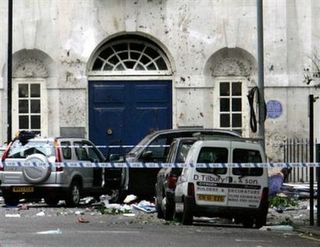
Four London Blasts Kill 40, Injure 300


By JANE WARDELL, Associated Press Writer (Yahoo News)

Four blasts rocked the London subway and tore open a packed double-decker bus during the morning rush hour Thursday, sending bloodied victims fleeing after what a shaken Prime Minister Tony Blair called "barbaric" terrorist attacks. At least 40 people were killed and more than 350 wounded.

Two U.S. law enforcement officials said at least 40 people were killed. In London, Deputy Assistant Commissioner Brian Piddick said at least 33 people killed in the subway system alone. He confirmed there were other deaths on the bus but gave no figures. London hospital officials contacted by The Associated Press reported more than 350 wounded.

Blair said the "terrorist attacks" were clearly designed to coincide with the G-8 summit opening in Gleneagles, Scotland. They also came a day after London won the bid to host the 2012 Olympics. A group calling itself "The Secret Organization of al-Qaida in Europe" claimed responsibility.

The explosions hit three subway stations and a double-decker bus in rapid succession between 8:30 and 9:30 a.m. local time. Implementing an emergency plan, authorities immediately shut down the subway and bus lines that log 8.4 million passenger trips every weekday. It brought the city's transportation system to a halt.

"It was chaos," said Gary Lewis, 32, who was evacuated from a subway train at King's Cross station. "The one haunting image was someone whose face was totally black and pouring with blood."

Blair, flanked by fellow G-8 leaders, including President Bush, said: "We shall prevail and they shall not."

Continue article here

Jul 1, 2005

R.I.P. Luther Vandross


Luther Vandross, R&B crooner deluxe, dead at 54

By Nekesa Mumbi Moody
ASSOCIATED PRESS

NEW YORK – Grammy award winner Luther Vandross, whose deep, lush voice on such hits as "Here and Now" and "Any Love" sold more than 25 million albums while providing the romantic backdrop for millions of couples worldwide, died Friday. He was 54.
Vandross died at John F. Kennedy Medical Center in Edison, N.J., said hospital spokesman Rob Cavanaugh. He did not release the cause of death but said in a statement that Vandross "never really recovered from" a stroke two years ago.

Since the stroke in his Manhattan home on April 16, 2003, the R&B crooner stopped making public appearances – but amazingly managed to continue his recording career. In 2004, he captured four Grammys as a sentimental favorite, including best song for the bittersweet "Dance With My Father."

Vandross, who was still in a wheelchair at the time, delivered a videotaped thank you.

"Remember, when I say goodbye it's never for long," said a weak-looking Vandross. "Because" – he broke into his familiar hit – "I believe in the power of love."

Vandross also battled weight problems for years while suffering from diabetes and hypertension.

He was arguably the most celebrated R&B balladeer of his generation. He made women swoon with his silky yet forceful tenor, which he often revved up like a motor engine before reaching his beautiful crescendos.

Jeff O'Conner, Vandross' publicist, called his death "a huge loss in the R&B industry. He was a close friend of mine and right now it's shocking."

O'Conner said he received condolence calls Friday from music luminaries such as Aretha Franklin, Patti LaBelle, Michael Jackson and Quincy Jones.

Singer Roberta Flack, on tour in Japan, said she was mourning the loss of her friend of more than 20 years.

"He was a musician who couldn't help but give you all he had," she said by telephone. "He was the kind of guy who was born to do what he did musically and let the world know about it. He was not born to keep it smothered in the chest."

Vandross was a four-time Grammy winner in the best male R&B performance category, taking home the trophy in 1990 for the single "Here and Now," in 1991 for his album "Power of Love," in 1996 for the track "Your Secret Love" and a last time for "Dance With My Father."

The album, with its single of the same name, debuted at No. 1 on the Billboard charts while Vandross remained hospitalized from his stroke. It was the first time a Vandross album had topped the charts in its first week of release.

In 2005, he was nominated for a Soul Train Music Award for a duet with Beyonce on "The Closer I Get To You."

Vandross' sound was so unusual few tried to copy it; even fewer could.

"I'm proud of that – it's one of the things that I'm most proud of," he told The Associated Press in a 2001 interview. "I was never compared to anyone in terms of sound."

Vandross' style harkened back to a more genteel era of crooning. While many of his contemporaries and successors belted out tunes that were sexually charged and explicit, Vandross preferred soft pillow talk and songs that spoke to heartfelt emotions.

"I'm more into poetry and metaphor, and I would much rather imply something rather than to blatantly state it," he said. "You blatantly state stuff sometimes when you can't think of a a poetic way to say it."

A career in music seemed predestined for the New York native; both his parents were singers, and his sister, Patricia, was part of a 1950s group called the Crests.

But he happily toiled in the musical background for years before he would have his first hit. He wrote songs for projects as varied as a David Bowie album ("Fascination") and the Broadway musical "The Wiz" ("Everybody Rejoice (Brand New Day)"), sang backup for acts such as Donna Summer and Barbra Streisand, and even became a leading commercial jingle singer.

Vandross credited Flack for prodding him to move into the spotlight after listening to one of his future hits, "Never Too Much."

"She started crying," he recalled. "She said, 'No, you're getting too comfortable (in the background). ... I'm going to introduce you to some people and get your career started.'"

Vandross' first big hit came as the lead vocalist for the group Change, with their 1980 hit, "The Glow of Love." That led to a recording contract with Epic Records, and in 1981, he made his solo recording debut with the disc "Never Too Much." The album, which contained his aching rendition of "A House is Not a Home," became an instant classic.

Over the years, Vandross would emerge as the leading romantic singer of his generation, racking up one platinum album after another and charting several R&B hits, such as "Superstar," "Give Me The Reason" and "Love Won't Let Me Wait."

Yet, while Vandross was a household name in the black community, he was frustrated by his failure to become a mainstream pop star. Indeed, it took Vandross until 1990 to score his first top 10 hit – the wedding staple "Here & Now."

"I just wanted more success. I didn't want to suddenly start wearing blond wigs to appeal to anyone," he told the AP.

"This is the same voice that sang Pepsi-Cola, Coca-Cola, NBC 'proud as a peacock,' ... America, the world, has heard the voice, so there's no reason that that music shouldn't have gone the complete distance, I mean, to number one."

Another frustration for Vandross was his lifelong battle with obesity. Health problems ran in his family, and Vandross struggled for years to control his waistline. When he first became a star, he was a hefty size; a few years later, he was almost skinny. His weight fluctuated so much that rumors swirled that he had more serious health problems than the hypertension and diabetes caused by his large frame.

Vandross' two sisters and a brother died before him. The lifelong bachelor never had any children, but doted on his nieces and nephews. The entertainer said his busy lifestyle made marriage difficult; besides, it wasn't what he wanted.

Associated Press Writer Sam Dolnick contributed to this story.

Jun 13, 2005

Now you know...


Jackson found not guilty on all counts
By Sally Connell and Michael Muskal (LA Times)

SANTA MARIA, Calif. -- Michael Jackson, the pop superstar who is one of the best-selling recording artists of all time, was acquitted of all 10 felony charges of conspiracy, plying a minor with alcohol, attempted child molestation and molesting a then-13-year-old cancer patient from Los Angeles.

The verdict, reached after more than 32 hours of work in Santa Barbara County Superior Court, brought to the close a more than four-month trial that featured 140 witnesses -- including defense testimony from celebrities Macaulay Culkin, Chris Tucker and Jay Leno.

Blah, Blah, Blah; finish reading this long ass article here.

Now onto the other equally important news:


Destiny's Child Bid Surprise Farewell to Fans at Barcelona Concert

"Destiny Fulfilled…And Lovin' It" Tour To Mark Final Live Performances By Best-selling Female Pop Vocal Group

Kelly, Beyoncé, & Michelle Thank Fans For Years Of Love & Support
(dateline - New York - June 12, 2005; source: Sony Urban/Columbia Records)

Destiny's Child, one of the top-selling female pop vocal groups of all time, made a surprise announcement , before a crowd of 16,000 fans, on-stage at the Palau St. Jordi in Barcelona, Spain on Saturday, June 11. Group member Kelly Rowland said that the group's current "Destiny Fulfilled…And Lovin' It" tour, presented by McDonalds, would be the last time they would perform together as Destiny's Child in Europe.

Thanking their fans for years of love and support, Beyoncé Knowles, Kelly Rowland and Michelle Williams announced that they would be retiring as Destiny's Child and moving forward to pursue personal goals and individual careers in music, theater, television and film.

Statement from Destiny's Child: "As a group, we've been blessed with success and the greatest fans in the world. We have been working together as Destiny's Child since we were nine , and touring together since we were fourteen. After a lot of discussion and some deep soul searching, we realized that our current tour has given us the opportunity to leave Destiny's Child on a high note, united in our friendship and filled with an overwhelming gratitude for our music, our fans, and each other. After all these wonderful years working together, we realized that now is the time to pursue our personal goals and solo efforts in earnest. This is a time of natural growth for all of us. No matter what happens, we will always love each other as friends and sisters and will always support each other as artists. We want to thank all of our fans for their incredible love and support and hope to see you all again as we continue fulfilling our destinies."

Destiny's Child will return to the States to begin the American leg of the group's tour on July 9. The final Destiny's Child concert is currently slated to take place in Vancouver on September 10.

The upcoming stateside "Destiny Fulfilled…And Lovin' It" concerts mark Destiny Child's first full-length tour of North America in four years. Support acts on the "Destiny Fulfilled…And Lovin' It" tour will include Destiny's Child's Sony Urban/Columbia Records labelmate Amerie, the platinum recording artist Mario, and emerging urban artist Tyra.

Again, Blah, Blah, Blah! Are people really surprised by any of this NEWS?

Jun 11, 2005

How smart is your state?

States Ranked: Smartest to Dumbest
The smartest state in the union for the second consecutive year is Massachusetts.

The dumbest, for the third year in a row, is New Mexico.

These are the findings of the Education State Rankings, a survey by Morgan Quitno Press of hundreds of public school systems in all 50 states. States were graded on a variety of factors based on how they compare to the national average. These included such positive attributes as per-pupil expenditures, public high school graduation rates, average class size, student reading and math proficiency, and pupil-teacher ratios. States received negative points for high drop-out rates and physical violence.

How does YOUR state rank?

Massachusetts
Connecticut
Vermont
New Jersey
Wisconsin
New York
Minnesota
Iowa
Pennsylvania
Montana

Maine
Virginia
Nebraska
New Hampshire
Kansas
Wyoming
Indiana
Maryland
North Dakota
Ohio

Colorado
South Dakota
Rhode Island
Illinois
North Carolina
Missouri
Delaware
Utah
Idaho
Washington

Michigan
South Carolina
Texas and West Virginia (tie)
Oregon
Arkansas
Kentucky
Georgia
Florida
Oklahoma

Tennessee
Hawaii
California
Alabama
Alaska
Louisiana
Mississippi
Arizona
Nevada
New Mexico

Jun 9, 2005

It could be the genes!!!!

I came across this story on CNN.com. Ladies, this could be useful information, if you believe in science!

Female orgasm in genes

LONDON, England (Reuters) -- Women who have difficulty reaching orgasm can blame it on their genes.

Like heart disease, anxiety and depression, scientists discovered in a study of 1,397 pairs of female twins that there is a genetic basis to female orgasm.

"We found that between 34 percent and 45 percent of the variation in ability to orgasm can be explained by underlying genetic variation," said Tim Spector, of the Twin Research Unit at St Thomas' Hospital in London.

"There is a biological underlying influence that can't be attributed purely to upbringing, religion or race."

Other studies have attributed differences in the ability to achieve orgasm to cultural, religious and psychological factors.

Between 12 to 15 percent of women don't have orgasms compared to about 2 percent of men. Males are also quicker at 2.5 minutes, while the average time it takes for a woman to reach orgasm is 12 minutes, according to Spector.

"Why is there this biological difference between the sexes? The fact that some of this is heritable suggests that evolution has a role," he told a news conference.

Spector suggested reaching an orgasm could be a way for women to assess whether a man would make a good long-term partner. It may also increase fertility, according to some theories.

In a study of identical and non-identical twins published on Wednesday in the journal Biology Letters, Spector and his team found huge variations when they surveyed them about sexual problems.

One in three women, or 32 percent, said they never or infrequently had an orgasm. But 14 percent said they always had an orgasm during intercourse.

"More women were able to orgasm during masturbation, with 34 percent always reaching orgasm," the researchers said in the journal.

The frequency of orgasm was higher for identical twins with a partner and by themselves which suggests a clear genetic impact, said Spector.

"There is something biological that explains some of this large variation between women," he said, adding that many genes could be involved.

If scientists could discover which genes and how they function, it could potentially pave the way for future therapies to treat women who cannot reach orgasm.

But Spector said orgasm is a very complex process which is poorly understood. Little research has been done because it is still a taboo subject.

Anatomical and biological features and psychological factors may all play a part.

Jun 7, 2005

Ugh...really?

Those that know me, know that I love most things old skool (child of the 80's), fashion, music, movies, you name it, I'm sure that at some point in my life, I found it quite fascinating. More specifically, I love movies from the 80's, especially those that capture the vibrant spirit of the decade or at the very least what it meant to be a kid or teenager during the period.

For me, Molly Ringwald's entire career in the 80's captured this and then some. "Sixteen Candles" and "Pretty Pink" were examples of how fucked up life could be at a time when all we really cared about were pimples and popularity. Yeah, she was quirky and not super attractive, but she was the utlimate personality chick. She represented for every girl at war with the awkwardness of adolescence. And it's because of that, that I found this news just a bit disturbing....

Ringwald Mulls 'Sixteen Candles' Sequel
June 6, 2005 ET

Could it be time to put more candles on the cake? Molly Ringwald said she's in discussions to make a sequel to "Sixteen Candles," the 1984 movie about the obstacles and embarrassments a teen girl faces on her birthday.

The film, directed by John Hughes, shot Ringwald to teen stardom, but she hasn't appeared in a major role in many years. She said she's been appearing in theater, small TV and film parts and raising a daughter, now 18 months old.

Ringwald, 37, said she had been approached repeatedly about doing a sequel, but recently read a script that she liked and wanted to star in the movie.

"I've turned it down for years. I couldn't see how it would work," she said. "Now, it seems right."

Ringwald was reunited at the MTV Movie Awards on Saturday with Anthony Michael Hall, Ally Sheedy and Paul Gleason, three of her co-stars in 1985's "The Breakfast Club," directed by John Hughes.

Judd Nelson and Emilio Estevez didn't show.

"They're in Africa with Dave Chappelle," Hall joked.
---

Ok, so of course I'm gonna go see it. How can I not? I just really don't understand why a sequel is necessary. I mean, sometimes, some things are BEST, when they're just left alone. A sequel to a classic like "Sixteen Candles" is worst then the rapper of the past who just doesn't understand that he should stop rapping...*cough* LL Cool J *cough*. Noone that loves Molly or that movie will ever forgets it's impact. However, the production of a sequel will forever distort it!!!

*sighs* Now I have to go home and watch it!

May 5, 2005

A Travesty of Epic Proportions......

In my attempts to stay current with the goings on of the world, I discovered the following news story. I was deeply saddened and thought I should share this unfortnate situation with y'all.

-----------

"Chappelle's Show" Shut Down

Chappelle's Show is a no-go, bitch!

In a surprise announcement Wednesday, Comedy Central said that the highly anticipated third season of Dave Chappelle's show will not make its May 31 premiere date.

"Comedy Central has suspended production on the third season of Chappelle's Show until further notice," network spokesman Tony Fox said in a brief statement. "All parties are optimistic that production will resume in the near future."

No official reason was given for the shutdown, but sources told E! News that Chappelle has been MIA from the set for weeks. There was no indication on how long the suspension would last.

In December, the network said that Chappelle's Show was behind schedule after Chappelle fell ill, forcing the network to postpone the expected February debut of new episodes.

"Dave--and his entire production crew for that matter--got a bit of a late start on writing season three," Fox told the New York Post. Production was slated to resume in January.

Last August, Chappelle, 31, reupped with Comedy Central in a massive two-year deal, valued at $50 million by the Hollywood Reporter. The deal also set a new Industry precedent--reportedly giving the funnyman a large cut of backend DVD sales.

Featuring Chappelle's often raunchy standup, offbeat sketches and killer parodies of Prince and Rick James, Chappelle's Show has steadily built a huge following since its debut in January of 2003. By the end of season two, the half-hour show was often pulling in more than three million viewers, a substantial number for basic cable. The first season currently ranks as the all-time top-selling TV show on DVD. (Paramount has indefinitely pushed back the release of the second season--the studio hopes to time the DVD to the start of season three.)

In addition to his gig at Comedy Central, Chappelle had been working on a book for Hyperion. There has been no word on the book's status; there's also no word on the reported Rick James biopic for Paramount in which Chappelle would portray the late R&B wild man.

------------

I can't believe this is happening. I was so looking forward to another season of Chappelle. The reruns of seasons one an two are really the only thing that has kept me laughing through my trials and tribulations!

-M

Apr 3, 2005

Death in 3's..

Johnnie Cochran, Terri Schiavo and now...


Millions Worldwide Mourn Pope John Paul II

By VICTOR L. SIMPSON

VATICAN CITY - Pope John Paul II, who helped topple communism in Europe and left a deeply conservative stamp on the church that he led for 26 years, died Saturday night in his Vatican apartment, ending a long public struggle against debilitating illness. He was 84.

"We all feel like orphans this evening," Undersecretary of State Archbishop Leonardo Sandri told the crowd of 70,000 that gathered in St. Peter's Square below the pope's still-lighted apartment windows.

In the massive piazza that stretches from St. Peter's Basilica, the assembled flock fell into a stunned silence before some people broke into applause — an Italian tradition in which mourners often clap for important figures. Others wept. Still others recited the rosary. A seminarian slowly waved a large red and white Polish flag draped with black bunting for the Polish-born pontiff, the most-traveled pope in history.

At one point, prelates asked those in the square to stay silent so they might "accompany the pope in his first steps into heaven."

But as the Vatican bells tolled in mourning, a group of young people sang, "Alleluia, he will rise again." One strummed a guitar, and other pilgrims joined in singing the "Ave Maria."

"The angels welcome you," Vatican TV said after papal spokesman Joaquin Navarro-Valls announced the death of the pope, who had for years suffered from Parkinson's disease and came down with fever and infections in recent weeks.

In contrast to the church's ancient traditions, Navarro-Valls announced the death to journalists in the most modern of communication forms, an e-mail that said: "The Holy Father died this evening at 9:37 p.m. in his private apartment." The spokesman said church officials now would be following instructions that John Paul had written for them on Feb. 22, 1996. A precise cause of death was not given.

Check out: Complete Story

Apr 1, 2005

I can't even begin to understand this...

Even after her death, the Schiavos and the Schindler's can't mourn peacefully with each other. Not only has this gone on way too long, but it's just absurd! They just refuse to let this woman rest in peace!

-M

Schiavo's Family Plans Separate Funerals
By MARK LONG, Associated Press Writer

PINELLAS PARK, Fla. - Protesters were gone Friday from the hospice where Terri Schiavo died, but the seething feud between her parents and husband raged, with the families planning separate funerals.

Schiavo, 41, died Thursday, 13 days after her feeding tube was removed by a judge's order after failed attempts by Congress and the White House to intervene.

Michael Schiavo said his wife had said she would not want to be kept alive artificially. Her parents, Bob and Mary Schindler, disagreed and held out hope for a miracle recovery for their severely brain-damaged daughter, whom they said still struggled to talk.

Terri Schiavo's medical condition for the last 15 years will be reviewed by yet another outsider. A medical examiner is conducting an autopsy that could help determine what Schiavo's state of consciousness was and whether she was abused by her husband, as the Schindlers allege. Those results are expected in a few weeks.

The matter of burying Schiavo, though, is something her families have had to settle themselves. The Schindlers, who are devout Catholics, wanted their daughter's remains buried in Florida, where they live. Michael Schiavo, however, has custody of the body and plans to have his wife cremated.

His brother, Scott Schiavo, said her ashes will be buried in an undisclosed location near Philadelphia so that her immediate family does not attend and turn the moment into a media spectacle. A funeral Mass, a concession to the Schindlers, was tentatively scheduled for Tuesday or Wednesday.

Schiavo's hospice — where demonstrators had wept, prayed and sang hymns — was mostly quiet on Friday morning, and city workers gathered up discarded signs and burned candles. More than 50 protesters had been arrested there over the past few weeks, many for trying to symbolically bring Schiavo food and water.

George Felos, Michael Schiavo's attorney, said Terri Schiavo died a "calm, peaceful and gentle death," cradled by her husband and with a stuffed animal under her arm. Michael Schiavo and Felos were present when she died.

"After these recent years of neglect at the hands of those who were supposed to protect and care for her, she is finally at peace with God for eternity," said her sister, Suzanne Vitadamo.

The ill will between husband and in-laws didn't abate even during Schiavo's final moments. The Schindlers' advisers complained that her brother and sister had been at her bedside a few minutes before the end came, but were not there at the moment of her death because Michael Schiavo would not let them in the room.

"And so his heartless cruelty continues until this very last moment," the Rev. Frank Pavone, a Roman Catholic priest and one of the Schindlers' spiritual advisers. He called Schiavo's death a "killing."

Felos confirmed that no one from Terri Schiavo's side of the family was with her when she died, but disputed the Schindlers' account of why that was. Schiavo's siblings had been asked to leave the room so that the hospice staff could examine her, and Bobby Schindler started arguing with a law enforcement official, so Michael Schiavo had him kept out, Felos said.

"Mrs. Schiavo had a right to have her last and final moments on this earth be experienced by a spirit of love and not of acrimony," the lawyer said.

On Thursday night, Bob Schindler thanked supporters during a 90-minute memorial service that drew more than 200 people to a nearby church.

"You got us through a really tough time," he said. "We're so appreciative of it. We'll never forget you all. Thank you so, so much. And Terri thanks you, too."

The death closed what was easily the longest, most bitter — and most heavily litigated — right-to-die dispute in U.S. history.

Schiavo suffered brain damage in 1990 after a chemical imbalance caused her heart to stop. She had left no written instructions in the event she became incapacitated.

During the seven-year legal battle, federal and state courts repeatedly rejected extraordinary attempts at intervention by Florida lawmakers, Gov. Jeb Bush, Congress and President Bush on behalf of her parents.

Supporters of her parents, many of them anti-abortion activists and political conservatives, harshly criticized the courts. Many religious groups, including the Roman Catholic Church, said the removal of sustenance violated fundamental religious tenets.

About 40 judges in six courts were involved in the case at one point or another. Six times, the U.S. Supreme Court declined to intervene. As Schiavo's life ebbed away, Congress rushed through a bill to allow the federal courts to take up the case, and President Bush signed it March 21. But the federal courts refused to step in.

The case prompted many people to ponder what they would want if they, too, were in such a desperate medical situation, and many rushed to draw up living wills. The case also led to a furious debate over the proper role of government in life-and-death decisions, and whether the Republicans in Congress violated their party's principles of limited government and deference to the states by getting involved.

In Washington on Thursday, the president was careful to extend condolences to Schiavo's "families" — meaning both Michael Schiavo and the Schindlers — even though he backed efforts to reconnect her feeding tube. He urged the creation of "a culture of life where all Americans are welcomed and valued and protected."

House Republican Leader Tom DeLay condemned the state and federal judges who refused to prolong her life, and he warned that lawmakers "will look at an arrogant and out-of-control judiciary that thumbs its nose at Congress and the president."

Gov. Bush, the president's brother, said Schiavo's death "is a window through which we can see the many issues left unresolved in our families and in our society. For that, we can be thankful for all that the life of Terri Schiavo has taught us."

Before she was stricken, Terri Schiavo had recurring battles with weight, and her collapse at age 26 was believed to have been caused by an eating disorder. Her parents, who visited her nearly every day, reported their daughter responded to their voices, and video showed her appearing to interact with her family. But the court-appointed doctor said the noises and facial expressions were reflexes.

Each side accused the other of being motivated by greed over a $1 million medical malpractice award Michael Schiavo received in 1992 from doctors who failed to diagnose the chemical imbalance. That money has nearly evaporated, spent on her medical care and legal costs.

Schiavo's feeding tube was briefly removed in 2001. It was reinserted after two days when a court intervened. In October 2003, the tube was removed again, but Gov. Bush rushed Terri's Law through the Legislature and had the tube reinserted after six days. The Florida Supreme Court later struck down the law as unconstitutional interference in the judicial system.

Mar 29, 2005

R.I.P. Johnnie L. Cochran, Jr.


Famed Attorney Johnnie L. Cochran Jr. Dies at 67
By Carla Hall, Times Staff Writer

Johnnie L. Cochran Jr., the masterful attorney who gained prominence as an early advocate for victims of police abuse, then achieved worldwide fame for successfully defending football star OJ. Simpson on murder charges, died this afternoon. He was 67.

Cochran died at his home in the Los Feliz section of Los Angeles of an inoperable brain tumor, according to his brother-in-law Bill Baker. His wife and his two sisters were with him at the time of his death.

Cochran, his family and colleagues were secretive about his illness to protect the attorney's privacy as well as the network of Cochran law offices that largely draw their cachet from his presence. But Cochran confirmed in a Sept. 2004 interview with The Times that he was being treated by the eminent neurosurgeon Keith Black at Cedars-Sinai Medical Center in Los Angeles.

Long before his defense of Simpson, Cochran was challenging the Los Angeles Police Department's misconduct.

From the 1960s on, when he represented the widow of Leonard Deadwyler, a black motorist killed during a police stop in Los Angeles, Cochran took police abuse to court. He won historic financial settlements and helped bring about lasting changes in police procedure.

His clients weren't always black — he unsuccessfully represented Reginald Denny, the white trucker beaten by a mob during the 1991 riots that followed the verdicts of not guilty in the trial of police officers charged with assaulting Rodney King. Instead of arguing, as he often did, that police had been brutal on the job, Cochran contended that the trucker's civil rights had been violated because police didn't do their jobs when they withdrew from a South Los Angeles intersection of Florence and Normandie, where rioting was fierce and Denny was beaten.

By the time Simpson was accused of murder in 1994, Cochran was "larger than life" in the city's black community, said Kerman Maddox, a political consultant and longtime Los Angeles resident. After Simpson, that profile would expand, earning him new admirers as well as new detractors who considered him a racially polarizing force.

His successful defense of Simpson against charges of murdering his ex-wife, Nicole Brown Simpson, and Ronald Lyle Goldman, a waiter and friend of Nicole's, vaulted him to the rank of celebrity, beseeched by autograph-seekers and parodied on "Saturday Night Live" and "Seinfeld."

His name was invoked by movie characters, one of whom boasted in the 1997 film "Jackie Brown" that his lawyer was so good, "he's my own personal Johnnie Cochran." Ever aware of his public image, he delighted in the attention and even played along, showing up in the occasional movie or TV show in a cameo role as himself.

Resplendently tailored and silky-voiced, clever and genteel, Cochran came to epitomize the formidable litigator, sought after by the famous and wealthy, the obscure and struggling, all believing they were victims of the system in one way or another.

He could figure out how to connect with any jury, and in his most famous case, the Simpson trial, he delivered to the jurors an eloquent, even lilting closing argument. He famously cast doubt on the prosecution's theory of the case saying, "If it doesn't fit, you must acquit." The line referred to Cochran's overall assessment of the prosecution's evidence, but it most evoked the moment during the trial when Simpson appeared to struggle to put on what were presumed to be the murderer's bloody gloves — one of which was found at the murder scene, the other outside Simpson's house.

As a result, the line is often quoted as "If the glove doesn't fit, you must acquit"-an adaptation that even Cochran made in his 2002 book, "A Lawyer's Life."

"He has a real gift for communicating with people," Erwin Chemerinsky, a Duke University law professor who offered analysis of the Simpson trial, said in late 2004. "Obviously you saw that in the OJ. case.… I think you could have given that case to a lot of talented lawyers and OJ. would have been convicted."

Cochran inspired law students and attained a level of stardom rare for a lawyer and even rarer for a black lawyer. One of his most important legacies was the transforming effect of a black man attaining that level of success.

"Clients of all races are now no longer hesitant to retain black lawyers to represent them in significant cases," said Winston Kevin McKesson, a black criminal defense attorney in Los Angeles. "That was not the case 25 or 30 years ago. We couldn't even get African Americans in our community to trust us. He's a historic figure."

However, the Simpson criminal trial defined Cochran's career for better and for worse. While it made him a household name and offered him access to virtually every high-profile criminal case, it also changed his life "drastically and forever," he wrote in "A Lawyer's Life." "It obscured everything I had done previously."

More galling and perplexing to him was the criticism that rained down after the Simpson verdicts. Though many legal experts marveled at Cochran's skill, a parade of critics — TV pundits and newspaper columnists, California's then governor, the Republican Pete Wilson, and even his own co-counsel, Robert Shapiro — decried a legal strategy that put the competence and character of the Los Angeles Police Department on trial.

"Not only did we play the race card, we dealt it from the bottom of the deck," Shapiro said in a national TV interview after Simpson was acquitted by a jury of nine African Americans, two whites and one Latino. (All but two were women.)

During the trial, Cochran and the rest of the defense team excoriated criminalists for sloppy work that compromised blood evidence and claimed that police officers prejudged Simpson. Cochran and his "Dream Team", as the defense attorneys were known, revealed that police Detective Mark Fuhrman, who collected key evidence in the case, had a history of making racist remarks.

Everything about the Simpson case came to personify the excess of Los Angeles. A combustible combination of murder, sex and race, the extravagantly lengthy trial was carried live on television, making it arguably the first high-profile reality TV show.

When it was finally over, the jury acquitted Simpson, but many in the public did not. A Times poll indicated that half the American public disagreed with the verdict. And the majority believed the defense used the issue of race inappropriately to help free a defendant whose controversial saga began unfolding when he fled police in a nationally televised slow-speed freeway chase.

Chemerinsky said Cochran did nothing more than discharge his duty as a zealous advocate in defending Simpson. "I think Johnnie Cochran did a superb job," Chemerinsky said. "He ultimately put the LAPD and the racism of the LAPD on trial, and that worked with that jury."

Cochran spent two post-trial memoirs trying to dispel the criticism.

"The charge that I could convince black jurors to vote to acquit a man they believed to be guilty of two murders because he is black is an insult to all African Americans," he wrote in "A Lawyer's Life."

It wasn't, Cochran contended, that he believed the police had conspired to frame Simpson. It was more that their racism led them to a "rush to judgment" and a willingness to "adjust the physical evidence slightly," he wrote.

"He got an awful rap in the white community after the Simpson trial," said Stuart Hanlon, a white attorney who was a longtime criminal defense collaborator with Cochran. "All he did was do a great job as a lawyer — which is what we're supposed to do — and beat some inept prosecutor. For him to get vilified for it just shows the racism in our community. I really think if OJ's lawyer had been white, that wouldn't have happened.… If I had done that trial and won, no one would hate me."

Ironically, up to that time, Cochran had spent most of his life not as a racial polarizing force but as the integrator, the black man gliding easily through white conference rooms, dinner parties, and neighborhoods.

In a September 2004 phone interview with the Times, Cochran said, he still would have taken the case knowing it would change his life. "I thought it was the right thing to do," he said.

Cochran continued to support Simpson's version of his activities the night his former wife and Goldman were found knifed to death outside her Brentwood townhouse.

"I still believe he's innocent of those charges," Cochran said in the September 2004 interview. "Even after all this time."

While the Simpson case may have been Cochran's bravura moment on the public stage, he believed that it was not his most important case. It was the long and twisted legal saga of Elmer "Geronimo" Pratt that marked for Cochran, at different points, both the nadir and the pinnacle of his career.

Authorities contended that Pratt, a former Black Panther party leader and Vietnam War veteran, robbed and shot a young white couple on a public tennis court in Santa Monica in December 1968. The woman died, but her husband survived and identified Pratt in a line-up two years after the shootings.

Cochran said his biggest disappointment was watching his client, Pratt — who now goes by the name Geronimo ji Jaga — be convicted of murder in 1972. And Cochran's greatest triumph came when a judge in Orange County reversed that conviction 25 years later.

The course of Cochran's four decade career zigzagged across the legal landscape, starting in the Los Angeles city attorney's office, where he eagerly prosecuted drunk driving cases, and ending in a private practice that earned him wealth and fame.

His law firm sprouted 14 offices outside California, devoted to personal injury law and other civil litigation. But Cochran remained rooted not just to Los Angeles but to Mid-Wilshire Boulevard, maintaining his legal headquarters there even as the street's glamour faded. For rising black professionals of his generation, a Wilshire Boulevard address was the ultimate aspiration.

The eldest child of four, Cochran was born in a charity hospital in Shreveport, La. He was, he wrote, the great-grandson of slaves and the grandson of a sharecropper. His ambitious father, Johnnie L. Cochran Sr., moved the family across the country to California and began an upward climb from working as a pipe fitter in the San Francisco Bay Area shipyards to selling insurance for Golden State Mutual, the state's leading black-owned insurance company.

The family settled in Los Angeles in 1949. There, Cochran's father ran an insurance district office, bought a house in a well-tended neighborhood on West 28th Street, and took his family to the Second Baptist Church.

Like other members of the mid-century's burgeoning black middle class in America, the senior Cochran and his wife, Hattie, expected much of themselves and more of their children. His father stressed education and working hard "to reach our fullest potential," Cochran wrote in "A Lawyer's Life." "And he seemed to think our fullest potential was always a little fuller than we did."

Cochran grew up wanting to be a lawyer, he surmises, because he loved to debate, a skill he honed at the dinner table and at Los Angeles High School. Dazzled by the natty attire of many classmates and their late-model convertibles, Cochran began developing a taste for stylish clothing and a love of fine cars.

After graduating from UCLA, Cochran earned a law degree from Loyola Marymount University in 1962. The summer after his first year in law school, he married Barbara Berry.

The couple eventually had two girls — Melodie and Tiffany — before the marriage ended in divorce. He later had a relationship with Patricia Sikora, who bore him his only son, Jonathan, now a California Highway Patrol officer — something Cochran loves reminding critics who say he hates all police.

As a college-age man, Cochran wrestled with his feelings about a white world that saw him as black before they saw him as anything else, a concept of duality that he said the writer and black liberationist W.E.B. DuBois best described as "two-ness."

"The concept of 'two-ness' is one that has eternally intrigued me," he wrote in "Journey to Justice," his first memoir. "…We were never viewed as just teachers, doctors, lawyers, scientists, and writers. We were perceived as black teachers, black doctors, black lawyers, black scientists and black writers."

But that distinction was inescapable as he made his way in Los Angeles. In the fall of 1961, during his last year in law school, he became the first black law clerk in the office of the city attorney. In early 1963, he became a deputy city attorney.

He enjoyed trial work but he grew uncomfortable prosecuting people — usually black men — who had allegedly resisted arrest. And he grew wary of the police, because many of those people showed signs of severe beating.

"By the mid-1960s, the problem of unchecked police misconduct was the defining issue among black Angelenos of every social class," he wrote in "Journey to Justice."

He left the city attorney's office in 1965 for private practice and kept busy defending the kind of people he once prosecuted.

It was a case of alleged police misconduct in May 1966 that first thrust Cochran into the spotlight. Deadwyler, speeding his pregnant wife to the hospital, was pulled over by police, then shot dead. The officer who stopped him said later he had reached into the car to grab the ignition key and the car lurched forward causing the gun to discharge accidentally.

The shooting outraged a city still emotionally smoldering from the Watts riots less than a year earlier. Cochran represented Deadwyler's widow, Barbara, at a coroner's inquest. As TV cameras rolled, viewers saw the deputy DA consulting with Cochran and often prefacing questions to witnesses with "Mr. Cochran wants to know…" A majority of jurors found the shooting of Deadwyler accidental, but Cochran's presence offered an indelible image of a black attorney as an important player.

"If you talk to African American professionals between 40 and 50, it was a powerful moment when they were young," said Maddox, who was one of those youngsters.

In the two decades after the Deadwyler inquest, Cochran took on other cases that challenged L.A. juries and police policies.

But he was devastated when Pratt was convicted in July 1972 of murder. Although the husband of Caroline Olsen, the murdered woman, had identified Pratt as the assailant and a former Black Panther rival, Julius Butler, had testified against Pratt, Cochran was confident the system would exonerate his client.

Only years later would Cochran learn that Butler — the witness against Pratt — had been an informant for the government, including the district attorney's office. Butler had denied that on the stand. If Cochran had known at the time, it would have been a different case.

"I had learned that prosecutors and law enforcement officials, convinced of their own righteousness, would do anything to make the system yield the 'right result,' " he wrote.

Years later, Cochran would suggest that the LAPD did just that to make their case against Simpson — and others would accuse Cochran of using similar methods to defend Simpson.

Cochran continued to represent the families of people he believed to be victims of police abuse and was able to extract from the city of Los Angeles the first cash settlement — $25,000 — in a wrongful death suit stemming from a police shooting.

In 1978, L.A. County Dist. Atty. John Van de Kamp tapped him to be assistant district attorney, the No. 3 position in the office, and suggested he change the system from the inside. Cochran left his $300,000 a year practice for the $49,000 salaried job, becoming the first African American to hold it.

But change came slowly. He lost a debate with his bosses over filing manslaughter charges against police officers who killed Eula Love, a black woman, after police said she threatened them with a knife. The police had been called to her home after Love, overdue on her gas bill, allegedly used a shovel to shoo away gas company employees.

Later, Cochran and Gil Garcetti, then a deputy district attorney, changed the way prosecutors investigated police shootings. They initiated the policy of rolling out a prosecutor and a district attorney's investigator to the scene of every police shooting, a move designed to make the investigation impartial. No longer would the government rely entirely on police investigations of their own shootings.

Cochran left the DA's office in 1981 and soon took on another case that would be a benchmark for the Los Angeles area. After a traffic stop, Ron Settles, a Cal State Long Beach football player, was booked by police in Signal Hill for resisting arrest, possession of cocaine, and assault on a police officer. However, the validity of the charges would never be tested in court — a few hours later, just before his bail was posted, Settles was found dead in his cell. Police said he apparently hung himself.

Cochran and attorney Mike Mitchell, representing Settles' parents at the coroner's inquest, contended that the athlete died as a result of a police chokehold. Although the jury never specified how he was killed, they did issue a majority verdict that Settles had not killed himself but "died at the hands of another."

Later, in the city of Los Angeles, Cochran was part of a group that successfully argued before the Police Commission that the bar-arm chokehold be banned.

In the 1980s, Cochran worked on burnishing his reputation as a premier attorney and player in Los Angeles. Mayor Tom Bradley, his mentor, and fellow Kappa Alpha Psi fraternity brother, appointed him to the powerful Los Angeles Airport Commission, which oversaw expansion and the awarding of contracts to run the airport.

And in court, he was winning millions of dollars in awards for victims injured or killed by the police. Most notably, he and law partner Eric Ferrer won a $9.4-million judgment for Patty Diaz, a 13-year-old Latina who was sexually assaulted in her home by an LAPD officer. At the time it was the largest award resulting from LAPD misconduct granted by a trial jury, although the plaintiff later agreed to a reduced award of $4.6 million.

In the middle of his rise as an attorney, his personal life took a new turn. As an airport commissioner, he was attending a 1981 conference when he met Dale Mason, an executive for an Atlanta-based concessionaire. Cochran and Mason, 13 years his junior, were married at the Bel-Air Hotel in 1985.

Mason survives him, as does his son, Jonathan Cochran; daughters, Tiffany Cochran Edwards and Melodie; and sisters Pearl Baker and Martha Jean Sherrard.

Cochran also cultivated a clientele of celebrities in trouble. In 1993, he represented pop superstar Michael Jackson during his first battle against accusations of sexual molestation. A year later, Simpson called Cochran from jail, begging him to join his defense team.

After his Simpson trial victory, there was hardly a prominent civil rights or police abuse case that he was not connected to in some way. But his impact was diluted by the sheer volume of what he undertook. He jetted between coasts, tried his hand at co-hosting a syndicated television legal show, and dipped in and out of numerous cases.

"At any given time, I am actively involved in about 50 different cases," he wrote in "A Lawyer's Life." That didn't always sit well with clients. The mother of Amidou Diallo, the unarmed African immigrant who was gunned down by police in 1999 in the Bronx, stirring a national outrage, had retained Cochran to represent her, but fired him when she felt he didn't have enough time for her.

"Maybe I did a few too many cases," he mused in a September 2004 phone interview. "I handled a lot, and they were real tough cases."

Cochran gave up the stressful and time-consuming practice of criminal law after successfully defending rap music mogul Sean Combs on weapons charges in New York in 2000.

He wanted to concentrate instead on other issues. Had he not become ill at the beginning of 2004, he would have helped prepare a lawsuit testing whether reparations will be paid for slavery in this country.

But one case he stayed involved with for more than two decades was that of Pratt. "Some people would say that Cochran abandoned the case. I know better," said Hanlon, who spent 23 years continuously working the case. "He was always there when I needed to talk to him."

Not only did Cochran lend his expertise when they finally got a hearing on whether Pratt's conviction should be overturned, he also lent his credit card to the effort. "We were broke," said Hanlon.

Because the court hearing was transferred from Los Angeles to the Orange County courtroom of a conservative judge, Cochran's presence was key. "I was a known radical," said Hanlon. "He brought a credibility to the courtroom that I couldn't bring.

Pratt's murder conviction was overturned in May 1997, and he was freed after 27 years behind bars. The Los Angeles district attorney declined to retry him. Cochran helped Pratt secure a $4.5-million settlement of a false imprisonment lawsuit.

"There are so many cases I believe in," said Cochran in a 2004 phone interview. "Probably the biggest was Pratt.…Just getting him free — I remember that day down in Orange County, that was probably the happiest day for me in my whole career."

Funeral services are pending.

Copyright © 2005, The Los Angeles Times

Mar 15, 2005

R.I.P. Lyn Collins

Death of R&B Singer a Loss for Hip-Hop
By RAQUEL CEPEDA, For The Associated Press

Hip-hop lost a matron in Lyn Collins. The R&B singer, who died Sunday at 56, first made her mark on the rap world in 1987 when her song "Think (About It)" was sampled on the smash hit "It Takes Two," by Rob Base and DJ E-Z Rock.

Other artists who have rapped Collins' soulful voice include Nas, Schoolly D, Public Enemy and most recently Ludacris.

"People sampled her because the era her music came from is a time in which it was quite a regular thing to, well, give the drummer some," Ahmir "Questlove" Thompson, the drummer for The Roots, said Tuesday via e-mail.

"Without her work, Nas would have had a different musical backdrop," Thompson said. "Collins' 'Land of Milk and Honey' was the track for his infamous 'hell for snuffing Jesus' outing on Main Source's 'Live at the Barbecue.'"

Collins took up singing as a teenager. At 14, she married a man who worked as the local promoter for the James Brown Revue. Brown heard Collins sing and in 1970 she was invited to join his traveling show. Her powerful voice led Brown to nickname her the "Female Preacher," because listening to her sing was a near-religious experience.

Two years after joining Brown, she cut "Think (About It)."

"Having graduated from the school of 'Brown Soulversity,'" Thompson said, "Ms. Collins was a very arresting artist and had a commanding stage presence."

"Plus, she was dope son!"

-------------------------------------------------------------------

Soul Singer Lyn Collins Passes On;
Sampled By Ludacris And Rob Base

By Remmie Fresh (allhiphop.com)

Hip-Hop heads may not be familiar with Lyn Collins by name, but they know her work as her voice anchored the 80’s runaway hit “It Takes Two.”

Rob Base and DJ E-Z Rock sampled Collin’s commanding voice on the 1988 song and it alone catapulted them into legend status.

Sadly, Collins died on Sunday from heart complications related to cardiac arrhythmia. She was only 56. The Abilene, Texas native died near Los Angeles in Huntington Memorial Hospital in Pasadena.

Before Hip-Hop was the rage, Collins’ legend was already established in the 70’s. As a teen member of the James Brown review, her authoritative presence earned her the name the “Female Preacher.” After two years with The Godfather of Soul, she released her solo debut, Think (About It). Later, in 1975, she put out Check Me Out If You Don't Know Me By Now.

More recently, Collins had embarked on a tour of Europe and had intended to continue next month.

She is survived by her two sons and their four children.

Public Enemy and Ludacris have also sampled Collins work.

For more information on Lyn Collins, click here.

Feb 21, 2005

Just what Africa needs....


it's own MTV!!

Seriously, I'm all for the promotion of African artists, especially the likes of Fema Kuti, Angelique Kidjoe and others, but African-centered MTV leaves a bad taste in my mouth! It screams regular old MTV programming in black face to me!

-M
-------------------------------------------------------------------------------
Curtain rises on MTV's debut pan-African channel

JOHANNESBURG (AFP) - MTV's first African channel goes on the air Tuesday, showcasing young artists such as Nigeria's 2face and South Africa's pop star Lebo to young audiences in 50 countries across the continent.

The inaugural broadcast of "MTV base", carried by MultiChoice Africa and three other satellite networks, will be beamed live from 8:00 pm (1800 GMT) across the continent in a gala launch held in Johannesburg, bringing African music and entertainment to more than 1.3 million households.

Although MTV already broadcasts "MTV Europe" throughout Africa, never before has there been a channel dedicated solely to the continent, says Linda Vermaas, MultiChoice's content manager.

"In the pay TV business it's all about consumer demand and we add channels based on ongoing independent market research ... And certainly a gap in the market exists," Vermaas told AFP.

'MTV base' -- MTV's 100th channel since its launch in 1981 -- can perhaps do for African stars what the music network did for Madonna (news - web sites) in the 1980s, when videos started propelling music careers.

Featuring similar programme content that has made the music channel a hit across the globe for the last 23 years, it will include profiles on hot emerging talent, top 10 videos chosen by African, other artists and viewers as well as a programme on the legends of African music.

Young viewers will also have the chance to "hang" with popular British DJ Trevor Nelson, as he meets and interviews top urban stars.

"It's a channel that has been tailor-made for the continent and will among others, profile African artists world-wide and give them a platform," says Colleen Goodman, brand manager at MultiChoice.

"Commitment to encouraging and developing grassroots African music talent is a major part of MTV base's agenda," MTV said in a statement, released last month in Johannesburg.

"The channel's music playlist will include videos from African artists such as Femi Kuti of Nigeria, Magic System of Ivory Coast, SSP of Angola ... and Angelique Kidjo of Benin," it added.

It will also see new emerging stars being placed under the spotlight including South Africa's popular pop celebrity Lebo Mathosa and 2face from Nigeria.

South African media analysts here however say they have mixed feelings on MTV's latest addition, calling it both "challenging and rewarding".

"It's challenging because of the extreme cultural and socio-economic inequalities that exists on the continent -- few people have the money to afford satellite television," says Elva Gomez Ve Sibandze, a senior researcher specialising in reality television, based at the eastern University of KwaZulu-Natal.

Nov 15, 2004

A Change Is Gonna Come....for the worst!!!!

Powell Said Poised to Leave Bush Cabinet

By GEORGE GEDDA and DEB RIECHMANN
Associated Press Writers
Published November 15, 2004, 9:55 AM CST

WASHINGTON -- Secretary of State Colin Powell and three other Cabinet members submitted their resignations, a senior administration official said Monday, as the shake-up of President Bush's second-term team escalated.

Besides Powell, who had argued Bush's case for ousting Iraqi leader Saddam Hussein before a skeptical U.N. Security Council in February 2003, others whose resignations were confirmed Monday included Agriculture Secretary Ann Veneman, Education Secretary Rod Paige and Energy Secretary Spencer Abraham.

The departures of Attorney General John Ashcroft and Commerce Secretary Donald Evans had been announced last week. The resignations announced Monday bring to six -- out of 15 -- the number of Cabinet members to decide so far to leave.

Bush already has chosen White House counsel Alberto Gonzales to succeed Ashcroft.

Article Continued...Chicago Tribune

Nov 13, 2004

Another one gone....


R.I.P.

Ol' Dirty Bastard Dead
By Nolan Strong
Date: 11/12/2004 6:30 pm


Wu-Tang Clan member Ol’ Dirty Bastard passed away today (November 13).

While details are sketchy, sources told AllHipHop.com that the rapper collapsed and died in a Manhattan recording studio.

Ol' Dirty had complained of chest pains, but the cause of death was not immediatley known.

The nine members of the veteran rap group appeared at The Theater at the Continental Airlines Arena for their first joint East Coast appearance in five years, in which Ol' Dirty was scheduled to perform. Sources said the rapper failed to appear for unknown reasons.

One of the founding members of the Wu-Tang Clan, the 35-year-old helped lay down the foundation for some of the most influential Hip-Hop in history.

He brought an air of humor to the macho world of rap, yet maintained enough integrity to be taken serious amongst a fickle Hip-Hop audience.

The Brooklyn born rapper was featured on Wu-Tang’s groundbreaking album, Enter the Wu-Tang (36 Chambers).

Shortly afterwards, he was shot in the stomach by another rapper during an argument on the street in Brooklyn.

He recovered and released the classic Return to the 36 Chambers: The Dirty Version, which spawned the hit singles "Brooklyn Zoo" and "Shimmy Shimmy Ya," which powered the album to gold status.

In 1998 the rapper further solidified his place in Hip-Hop history. That year, he rushed out of a recording studio to help save the life of a four-year-old girl who had been hit by a car and was trapped underneath.

The next day he appeared at the Grammy Awards and rushed the stage during Shawn Colvin’s acceptance speech for her Grammy Award winning song “Sunny.”

Dressed in a red suit, the rapper told the crowd that Wu-Tang shouldn’t have lost their Grammy to Sean “P. Diddy” Combs and then uttered the now famous words: “Wu-Tang is for the children.”

In 1998 he was shot again in Brownsville, Brooklyn, after two robbers pushed their way into his girlfriend's apartment. The bandits stole money and jewelry and shot ODB once. The bullet entered his back and went through his body, all superficial wounds.

After being treated in a New York emergency room, he ignored doctor’s warnings and left the hospital.

He was arrested several more times the following year for various charges, including threatening bouncers at the House of Blues in Los Angeles and for lounging on his balcony in the nude in Berlin, Germany. No charges were filed in that case.

Later that year, he was arrested and charged with attempted murder, after police claimed he jumped out of his car and started shooting at them. Those charges were dismissed when the police failed to present credible evidence.

In October of 2000, the rapper was almost finished a stint in rehab when he made a run for it, spending a month as a fugitive, during which time he performed at the Hammerstein Ballroom in front of hundreds of stunned fans.

He left the premise that evening but was captured a short time later in Philadelphia, signing autographs in a McDonald's parking lot.

He was extradited to New York, where he stood trial. In April of 2001, he received a sentence of two to four years in state prison.

After emerging triumphantly from jail and rehab, the rapper inked a deal with Roc-A-Fella Records in May of 2003.

I'm happy to be here,” Ol' Dirty said at the press conference. “I thought I wasn't gonna be able to touch another microphone. I'm happy my eyes are still open."

The rapper also had launched his own clothing line, Dirty Wear.

The news comes as Hip-Hop community was mourning the passing of another rapper, Mac Dre, who was shot to death in Kansas City.

Source: AllHipHop.com

Nov 10, 2004

A Very Small Peace of Mind...

A mentor and dear friend sent me this article. It's a powerful critique on the recent election, one of the best I've read. I found it a bit infuriating when I think about just how vital this election was to our future, especially us black and brown folks. However, it's a reflective and rejuvenating reminder that the struggle continues and we gotta fight...PERIOD!

Concede Nothing To Bush; Black Concensus Remains Intact-The Black Commentator

The worst possible outcome of Tuesday’s election would have been that George Bush won with the help of a divided Black electorate. Instead, African Americans reaffirmed the vitality of the Black Political Consensus – our eyes firmly fixed on the prize: peace, jobs and justice. Despite faith-based blandishments to the sell-out branch of the Black clergy, massive deployment of the GOP’s gay wedge issue and, most hurtfully, the Kerry team’s initial determination to render African Americans invisible and mute in the campaign, Blacks stood like a rock in defense of their own interests. Undeterred by disinformation that insanely (or maybe just inanely) predicted a doubling of Black support for Bush, African Americans placed their numbers and sheer will in the path of the Bush II juggernaut. It rolled over us, by fair means and foul, but our Consensus – the impermeable historical glue that makes African Americans unique in the Diaspora – remained intact.

And, truth be known, we had more white people on our side in this election than at any time in modern American history – just not enough. The Bush men brag that their figurehead won more votes than any president, ever. Yet more people also voted against Bush than any previous president. We who have never – and will never – win US-wide power on our own, were on Election Day at the vortex of the struggle against an enemy that makes the planet shiver.

This is the cross we bear – and it muscles us up. That’s why the Republicans targeted Black precincts and voter rolls, everywhere – not just in the battleground states – in the attempt to bowl over the front pins in the Democratic electoral configuration. Republicans know where the center of the party’s demographic gravity lies, and they went for it, in full view of the world. After a “decent interval” of cynical niceties – a charade that began on Wednesday and will be catered by Kerry’s DLC – the GOP has every intention to bring to bear the full power of the Bush II state against mainstream Black America political structures.

As “provisional” citizens, we subjected ourselves to degrading identification interrogations, lined up like suspects deep into the night – or, as Harvard’s Dr. Michael Dawson puts it, “standing patiently for regime change” – only to be finally assigned a “provisional” ballot that may never be counted, or even known to exist. African Americans didn’t perform these electoral feats for John Kerry or any combination of white Democrats; we did it for ourselves, because we know what’s coming down the road.

An “inside” job

“We shall not be moved,” went the civil rights song. Four years of mercenary Black faces in high Republican places – Colin Powell, Condoleezza Rice, Rod Paige – have failed to move us from our righteous Consensus for social justice and international peace, or to dim our highly evolved vision of Black America’s singular mission. These are the cards we have been dealt by history. However, African Americans are especially vulnerable to demoralization from within.

In mid-October, the Joint Center for Political and Economic Studies (JCPES), the venerable Washington-based Black think tank, announced that its 2004 survey of African American opinion showed that 18 percent of respondents “would like to see” Bush win – dramatic “news” that the corporate media snatched up and clutched to their bosoms like the Holy Grail. Breaking down the figures, the JCPES claimed that 29 percent of “secular conservative” Blacks and 36 percent of “Christian conservatives” wanted Bush to win on November 2. Eight percent of “liberal” African Americans and 13 percent of self-identified “moderates” also wished for a Bush victory. “I think Bush's faith-based initiative, combined with the gay marriage issue and also Bush's sort of overtly Southern religious personality has made him more popular among black conservative Christians," JCPES research director David Bositis told the New York Times.

Apparently, the self-selected Black “conservative Christians” were actually less numerous than the JCPES assumed, or didn’t understand the question, or said what they thought the pollsters wanted to hear.

Within less than two weeks, the New York Times and the St. Petersburg, Florida, Times claimed to have independently discovered that 17 and 19 percent of Blacks, respectively, had lined up in the Republican column. This, as headlines screamed the full extent of the Bush administration’s planned disruptions of Black voter activities. A disclaimer was issued by the two white papers on October 25, warning that their data could be off due to “large margins of sampling error because of the small samples of black voters.” But by then, Republicans and their media allies were gleefully celebrating the giant crack in the Black Political Consensus, citing JCPES as the authority.

Head researcher Bositis began backing off the JCPES’s finding, telling columnist Deborah Mathis the 18 percent figure was “an outside number; something in the 12-14 percent range may be more like it. Even so,” Mathis wrote, “that would be almost double what W got from black voters in 2000.”

When Black voters finally got to speak for themselves on November 2, Bush got 10 or 11 percent of the Black vote, respectively, according to Washington Post and CNN exit polls. The ultra-high profile presence of Condoleezza and Colin, the millions lavished on corrupt Rev. Greedygut preachers, the endless propaganda about a growing “new class” of Black conservatives, the disinformation from the New York Times and, yes, from the Joint Center for Political and Economic Studies – all this and more over four years had moved the Black electorate a mere one percent or (maybe) two into the Republican ranks.

“The turnout should wash away any doubt about the conclusions African Americans have come to about the legitimacy of this regime,” said Harvard’s Dr. Dawson, a noted social demographer who, along with colleague Dr. Lawrence Bobo, has been studying racial divisions under the reign of George W. Bush. (See , “Blacks, Whites Live in Different Moral Universe, October 28.)

The JCPES, which over the years has accrued great authority as a source of data and analysis about African Americans, should take much more seriously the harm that it inflicts through data that is not put into proper context, or just plain bad data. This is not the first time that the Joint Center has given aid and comfort to the Hard Right through faulty questions and imprecise conclusions (see , November 21, 2002).

The Black Consensus is perhaps our greatest resource. As distinguished from a reflexive, unthinking sense of “unity,” the broad African American worldview is based on generations of shared experience with the same foe: American white supremacy. It is, in a sense, our collective genius: the ability to sustain a humane and progressive Black polity while under constant assault from the larger society’s corrupting commercial, political and cultural forces – including the coercive powers of an ever-hostile state. The Black Political Consensus should never be artificially buttressed or exaggerated, but to the extent that it exists, it is our sword and shield. It takes us into battle, and prepares us for the next one. It sustained us through November 2.

Gays, Youth, Latinos and lots of whites

Union officials deeply involved in the get-out-the-vote effort in Detroit tell of “ferocious” debates among rank and file Blacks over anti-same-sex marriage initiatives on the ballot in Michigan and ten other states, on Tuesday. While urban infrastructure and services crumbled around them, otherwise sensible African Americans allowed themselves to be engaged by the Republican’s wedge issue. On Election Day, Blacks were as likely as whites to vote against same-sex marriage – yet they did not take the bait set out for them by sell-out preachers, to vote for George Bush. There is no Black Consensus on homosexuality. The JCPES’s “Christian conservatives” – however many there are – knew where to draw the line.

New lines are being drawn by white youth who, starting in the Reagan years, polled even more conservative than their Sixties-influenced elders. Deep in the bowels of Alabama and South Carolina, where overwhelming majorities of whites swear by Bush, white youth broke ranks this week. “Even in the bastions of the Confederacy young people were breaking for Kerry,” Dr. Dawson told . “That’s the most positive sign for the future.” Indeed, it is clear proof of the deep penetration of Hip Hop sensibilities outside of the Black community. White rapper Eminem’s anti-Bush video-animation “Mosh” will likely, through the perverse mechanisms of corporate racism, cause record labels to loosen the political controls that have stifled many Black rap artists for more than a decade. Another political/cultural world is opening up even as the Bush men try to shut this one down.

Beyond the bling, Hip Hop activism is getting serious, portending a radically different – but no less rooted – political aesthetic as the Black Consensus evolves. (See , “Hip Hop Generation Agenda,” July 1, 2004.) Maya Rockeymoore, author of The Political Action Handbook: A How To Guide for the Hip Hop Generation, speaks of “an unprecedented focus on the presidential campaign among the 34 and under crowd. The challenge will be to get them to engage in driving a transformational political agenda beyond November 3."

Black youth are conscientiously assuming responsibility for the ancestral legacy. For many young activists, Hip Hop is a means to share African American wisdom and solidarity with the world. Bush can bum-rush the polls, but this show goes on. Harvard’s Prof. Dawson is cautiously optimistic, fearing that elections-programmed youth might “go into a three-year funk” until the next campaign. “We have to organize from the grassroots up. It’s a perilous future. The national government is going to go after the NAACP and the unions.”

African Americans are approaching that future guided by a Consensus on core issues that has so far remained largely impervious to outside manipulation – although it is subject to diversions and distractions such as the ridiculous debate on gays emanating from a gay-saturated Black church!

The November 2 data on Latino voters is disturbing. Bush appears to have garnered substantially more Latino votes than in 2000, a development that some observers credit to deepening Hispanic involvement in the military. Yet, no group includes more families with members in the military than African Americans, who nevertheless are the least inclined to support U.S. adventures abroad. Many Latinos are apparently headed in a different political direction, but we should not draw general conclusions without a nationality-by-nationality analysis. There is a whole world of Spanish-speakers in the Americas. There is no consensus on Latinos among African Americans, or among Latinos, themselves. November 2 has presented us with troubling questions.

Christians from Hell

The swelling white Republican base that triumphed on Election Day, is a nightmare. Although their actual numbers may well have been augmented by electronic means in counties with computerized voting (including the whole state of Georgia, for example), there can be no doubt that the Bush victory was propelled by something very much like a mass social movement, with its own vocabulary and leadership structures. This is Bush’s army, says Dr. Dawson. “The Bush administration has achieved absolute mastery of white Protestants, particularly those with less education. This is damning for the country and its future.”

It is actually a familiar enemy, drawn from the same “stock” that have cut off their economic noses to spite Black faces since the end of the Civil War. They were once the Dixiecrat base, who then became the southern Republican base, and are now tied together with similar white elements throughout the country by interlocking networks of churches and the Republican Party. The corporate media feign surprise and fascination at the emergence of this huge group of whites – a posture that strikes many Blacks as disingenuous, since those of us with southern roots know that crowd all too well. According to the Washington Post’s David Broder, “the exit poll indicated that about 22 percent of [Tuesday's] voters were white evangelical or born-again Christians, three-quarters of whom went for Bush.” That amounts to about one-third of Bush’s total national vote.

This indispensable core, which now acts as a mass citizen militia for Karl Rove and other Bush commandants, scares the hell out of many of the 44 percent of white folks who didn’t vote for Bush. Black Americans do not need European models of fascism to understand the grave threat these people represent to life and liberty. They are the folks standing under the tree, while we swing from the limbs.

These whites – or rather, their leaders – are masters of euphemism. They swamped the polls (with some technical and political assistance) on Tuesday with the words “moral values” on their lips – white evangelical code for the “good people” versus the “bad” people. The ancient but still fiercely operative Black-white paradigm has been overlaid with “Arabs,” “clash of civilizations” and “homosexuals,” but it’s still the same onion. The new texture of the old paradigm of oppression simply allows more whites to act/vote on what NAACP Chairman Julian Bond calls their “racist impulses.” These are the impulses that fueled the Republican electoral machine.

On the other hand, we at believe that there is a far deeper and wider white opposition to the current regime than existed at any point in the supposedly “turbulent” Sixties and early Seventies. Many anti-Bush whites are aware that when Black folks were disenfranchised by a criminal conspiracy of George W. Bush’s national government, they were also disenfranchised. Even larger proportions of white youth know the deal. Black people’s only obligation to them is the same one we have to ourselves: to lead.

Kerry’s separate peace

As usual, the corporate media pretend that the Republican’s bullying and official criminality in the weeks preceding Election Day – events they covered – never happened. John Kerry collaborates in the farce, proclaiming in his public concession speech that America is in "desperate need for unity, for finding common ground and coming together. Today, I hope we can begin the healing."

But the troops who carried him, the Black men and women targeted for harassment and humiliation at the polls, are bleeding on the field, many of their votes never to be counted or even acknowledged. The vaunted legions of Democratic lawyers that were supposed to descend on Ohio and Florida to tear apart the rigged systems of electoral apartheid were told to stand down on Tuesday night. PBS News Hour’s Margaret Warner told viewers that Kerry’s legal team advocated a “scorched earth” policy to challenge the crooked system until it screamed – a result Democratic troops would have cheered. Kerry overruled his lawyers, to make a false peace with the Pirates.

At Harvard, Dr. Dawson reports that “students don’t understand how Kerry could concede before all the votes, particularly Black votes, were counted. He owes those people, who stood for hours in line and were asked for multiple identifications. We have another bounced check.”

And what of the provisional ballots in Ohio, which Democrats at one time numbered at 250,000? What about all the federally-mandated provisional ballots in each of the 50 states. Are these all to be swept under the rug to avoid what Kerry calls “a protracted legal process?” Once again, reconciliation between the rich and white trumps justice for Blacks every time.

In Florida, the computer-generated Bush-heavy election returns that so dramatically clashed with earlier Kerry-heavy human exit polls are now explained away as the result of the stealth invasion of Karl Rove’s church-based mass voter movement – a half-million strong evangelical invasion force that most hard-wired Republican pundits did not even know existed. As “Ghosts of Florida” author Tom Grayman III writes, “by no method has it been determined that the [exit] polling was incorrect and the voting equipment was not.”

On Washington-based XM-Radio, talk show host Mark Thompson remarked that the “third eye” of every Black person in America was wide open, blinking in disbelief as Kerry Democrats and Bush Republicans rearrange the facts about November 2, 2004.

The last thing America needs is unity with thieves, Pirates and punks. The nation and the world need peace, jobs and justice. Let’s get back to work.

FMI: Check out The Black Commentator at